

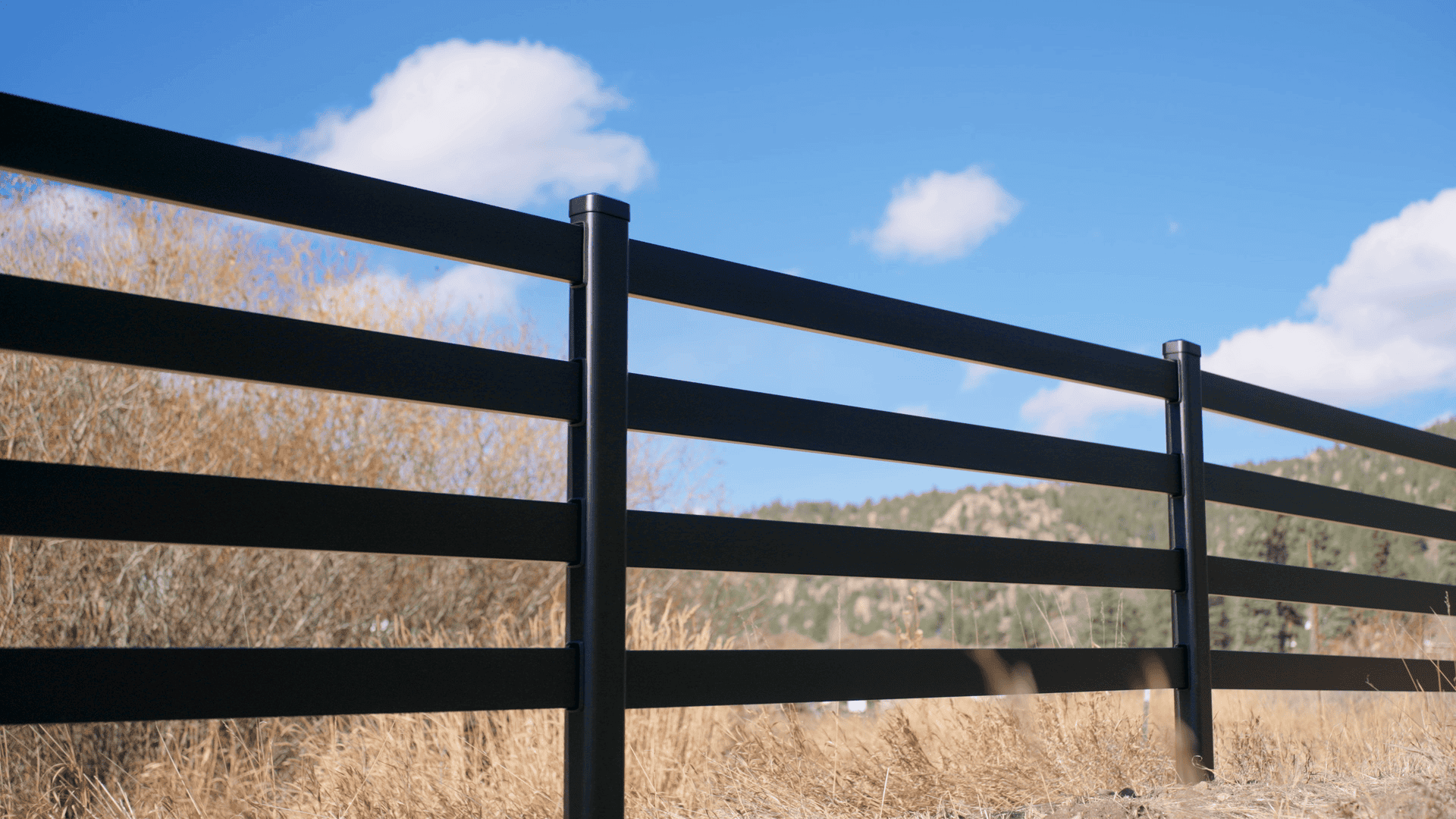

Your fencing project represents a major investment in your property. The fencing company you choose determines whether that investment protects your horses for decades or becomes an expensive headache requiring replacement far sooner than it should.
We’ve seen it too many times. Ranchers who went with the lowest bid, only to find the deal came with substandard materials, poor installation, and a company that disappeared when problems emerged. Or folks who hired based on a slick website and convincing sales pitch, then watched their beautiful new fence deteriorate within a few years because the materials couldn’t deliver what was promised.
Choosing a fencing company isn’t just about finding someone to dig holes and hang boards. It’s about finding a partner who understands horse fencing requirements, sources quality materials, and stands behind their work long after the check clears.
The right fence company makes your project seamless. The wrong one creates years of problems. Below, we’ll walk through exactly how to separate the professionals from the pretenders before you commit a single dollar.
Start With Your Project Requirements
Before evaluating companies, get clear on what you actually need.
- Property Assessment: Walk your property noting terrain challenges—steep grades, rocky soil, wet areas, existing obstacles. Companies experienced in ranch fencing will ask about these factors. Those who don’t are winging it.
- Footage Calculation: Measure or estimate your total fencing needs accurately. Understand how many fence posts you need based on your layout. Vague estimates lead to inaccurate quotes that become disputes later.
- Species Requirements: Different animals need different fencing. Safe fencing for horses differs from cattle containment. If you’re running mixed operations, say so upfront. Companies specializing in agricultural fencing understand these distinctions. General contractors often don’t.
- Timeline Expectations: Be realistic about when you need completion. Rush jobs invite problems. Quality companies will tell you honest timelines, not what you want to hear. If everyone else quotes 2-3 weeks but one company promises completion in three days, that’s a red flag, not a benefit.
- Budget Parameters: Know your realistic budget including contingency for unexpected site conditions. Companies can work within budgets, but they need honest numbers.
Questions to Ask Every Fencing Company
Smart questions separate experienced professionals from amateurs hoping to learn on your dime. You’ll also want to keep in mind that not all suppliers are installers—you might need to find your own installation contractor, and that’s usually a good thing.
Experience and Specialization
- “How long have you been installing [type of fence] specifically?” General fencing experience doesn’t equal expertise in steel board fencing or equestrian fencing. You want companies with specific, relevant experience, not jacks-of-all-trades.
- “Can you provide references from similar projects?” Actually call these references. Ask about problems encountered, how the company handled them, and whether the fence is performing as promised years later. Recent references matter, but so do installations that are 5-10 years old and still performing well.
- “What percentage of your work involves horse properties?” Companies primarily doing residential privacy fencing think differently than those who understand livestock behavior and safe horse paddock design.
Material Knowledge and Sourcing
- “What materials do you typically use and why?” Quality companies can articulate material advantages and limitations. They’ll discuss 3 vs 4 rail configurations, explain coating systems, and detail why they source from particular manufacturers.
- “Where do you source materials?” Direct manufacturer relationships often mean better pricing and accountability. Companies buying through multiple middlemen lose control over quality and face supply inconsistencies.
- “What warranties cover materials and installation?” Manufacturer warranties matter, but installation warranties matter more. A 20-year material warranty means nothing if the company that installed it poorly is gone in three years.
Installation Capabilities and Methods
- “Who actually performs the installation?” Many companies subcontract installation. That’s not automatically bad, but you need to know. Are installers employees or contractors? How long have they worked with this company? What oversight ensures quality?
- “What equipment do you use for post installation?” Proper equipment matters enormously. Companies using appropriate augers and post-setting equipment deliver better results than those cobbling together inadequate tools. Our installation documentation details proper methods—companies should describe similar approaches.
- “How do you handle difficult site conditions?” Every property has challenges—rock, clay, slopes, water. Experienced companies have solved these problems repeatedly. Those who haven’t will learn on your property, at your expense.
- “What’s your typical crew size and project timeline?” Understand the work process. Unrealistically small crews or impossibly short timelines signal either inexperience or corners being cut.
Business Practices and Protection
- “Are you licensed, bonded, and insured?” Non-negotiable. Verify this independently—don’t just take their word. Uninsured contractors working on your property create massive liability if someone gets hurt.
- “What does your contract include?” Detailed contracts protect both parties. Vague agreements create disputes. The contract should specify materials (including specific product models/grades), installation methods, timeline, payment schedule, and warranty terms.
- “What’s your payment schedule?” Reasonable payment schedules tie payments to work completion—deposit to start, progress payments at defined milestones, final payment upon satisfactory completion. Avoid companies demanding full payment upfront or unusual payment terms.
- “How do you handle change orders and unexpected conditions?” Problems happen. Professional companies have clear processes for documenting issues, proposing solutions, and adjusting scope. This conversation reveals how they’ll handle inevitable project challenges.
How to Evaluate Material Options Companies Offer
Not all companies work with all materials, and that’s fine, but you understand what they’re recommending and why.
Wood Fencing
Companies pushing wood fence should discuss species differences (cedar vs. treated pine), maintenance requirements, and realistic lifespan. They should acknowledge wood’s limitations, not pretend they don’t exist.
Warning sign: Companies dismissing maintenance requirements or claiming wood lasts “forever with proper care.” Wood is beautiful but demanding. Honest companies acknowledge this reality.
Vinyl Fencing
Vinyl fence companies often oversell longevity and undersell brittleness issues, especially in temperature extremes. Ask about their oldest installations and actual failure rates. Companies with long vinyl track records can discuss these honestly.
Wire and Mesh
For companies recommending high-tensile wire or no-climb mesh, ask about their tensioning methods and maintenance requirements. These systems demand proper installation—companies without specific expertise create dangerous situations.
Steel Board and Metal Rail Systems
Quality steel board fencing requires proper sourcing and installation technique. Companies offering these systems should discuss coating specifications (galvanization ratings, powder coat quality), post-setting depth requirements, and long-term performance expectations.
Ask to see installations that are 10+ years old. Steel board should look nearly identical to new installations, and that’s the point. Companies selling inferior metal products can’t show you this.
Why We Built Buckley Fence Different
We started Buckley Fence because we saw ranchers repeatedly burned by companies that promised quality and delivered problems.
We’re not general contractors doing fencing as a sideline. We’re not residential fence companies dabbling in agricultural work. We engineer and manufacture steel board fencing systems specifically for horses and livestock, and we’ve been doing it for decades.
Our materials come from our manufacturing facility—no middlemen, no quality compromises, no supply chain excuses. When you order Buckley Fence, you’re getting materials we engineered, we manufactured, and we stand behind completely.
We don’t employ installation crews directly, but we’ve built a nationwide network of installers we’ve trained and certified in proper steel board fence installation. These aren’t random contractors—they’re professionals we’ve vetted, trained, and continue supporting. Our installation resources and video guides ensure consistent quality regardless of who’s digging the holes.
Our warranty backs both materials and proper installation because we’re confident in what we’ve built. Browse our gallery showing installations from 5, 10, even 30+ years ago that still look new. Read testimonials from ranchers describing not just satisfaction with initial installation, but long-term performance that justified their investment.
We’re transparent about costs, timelines, and what you’re actually getting. Our pricing runs $29-36 per foot installed—not the cheapest option, never claimed to be. But when you calculate total lifetime cost including maintenance and replacement cycles, we’re the most economical choice for serious horse operations.
Make the Right Fencing Decision
Choosing a fencing company comes down to three factors:
- Materials that match your needs
- Installation quality you can trust
- Company that’ll be there when you need them
Price matters, but it’s not the only thing that matters. The cheapest company rarely delivers the best value. The most expensive doesn’t automatically deliver superior results. Look for the company offering the best combination of quality materials, proven installation capability, and long-term support at a fair price.
Ready to start your project? Contact us to discuss your specific needs. We’ll provide straight answers, detailed quotes, and connections to certified installers in your area. No pressure, no games—just honest information to help you make the best decision for your property.
Let’s build something right together.
Frequently Asked Questions
Q. How many quotes should I get for my fencing project?
Three to five quotes from qualified companies provide good comparison without overwhelming yourself. Focus on quality of quotes over quantity. One detailed quote from a qualified specialist beats five vague quotes from general contractors.
Q. What questions should I ask references provided by fencing companies?
Ask about installation timeline accuracy, how the company handled unexpected problems, quality of communication throughout the project, and how the fence is performing years later. Inquire about any issues that emerged and how the company addressed them.
Q. Should I hire separate companies for materials and installation?
Integrated suppliers who manufacture materials and coordinate installation typically deliver better results with clearer accountability. However, buying materials separately can work if you’re knowledgeable and the installer has experience with those specific materials.
Q. What’s a reasonable timeline for a typical residential horse fencing project?
A 1,000-foot installation typically requires 5-10 working days depending on terrain, soil conditions, and weather. Companies promising completion in 2-3 days are either unusually large crews (expensive) or cutting corners (dangerous). Companies needing 3+ weeks for standard installation either lack resources or are juggling too many projects simultaneously.
